Real results
Before and after — from our clinic
Actual results of cleft lip and cleft palate repairs performed by Dr. Mohamed Abdellatif.
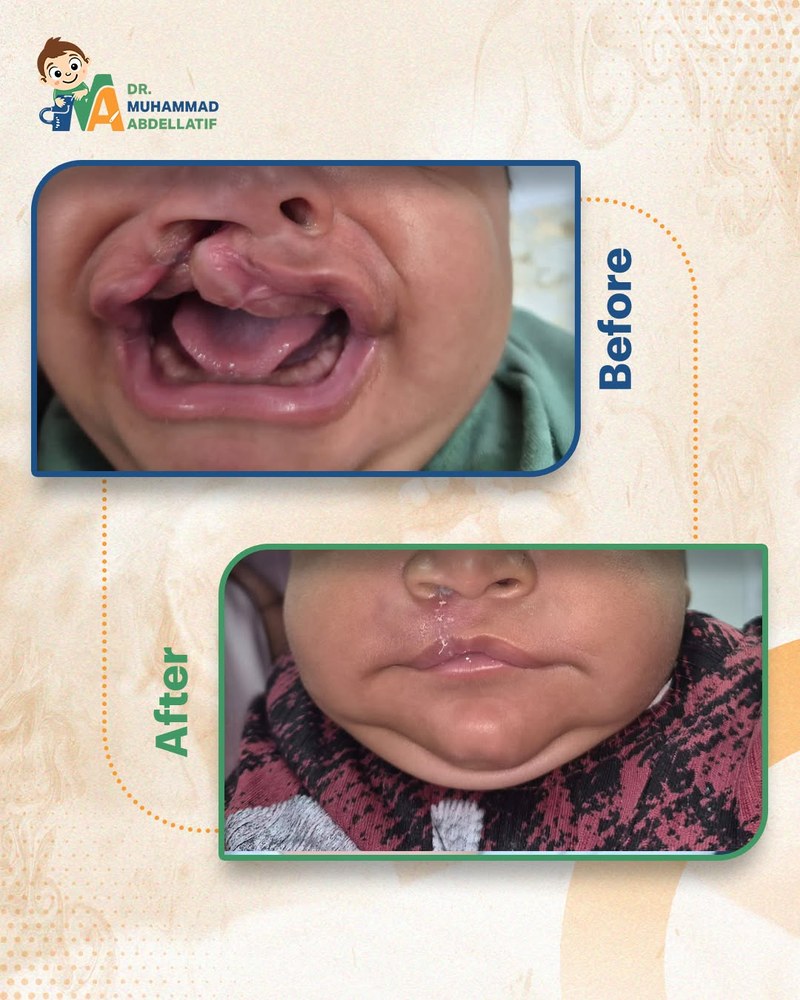
Cleft lip repair — before and after
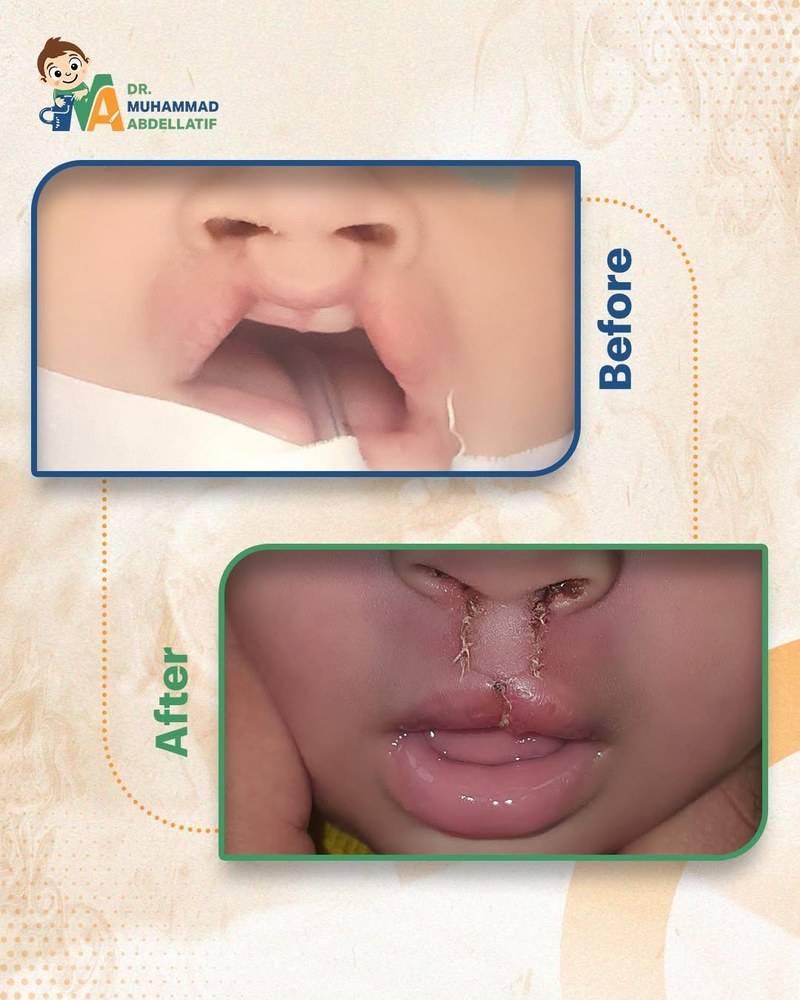
Result of the repair — before and after
Early repair restores feeding, natural speech and healthy facial growth. The complete protocol we follow with every child and family.
Congenital anomalies that happen when the tissues of the lip or the roof of the mouth do not form completely while the baby develops in the womb, leaving a gap in the lip, the palate, or both. The condition affects feeding and speech, and sometimes breathing, hearing and the growth of the teeth and jaw.
The good news: with early intervention and integrated treatment, most children can live a completely normal life — in appearance and in function.
Genetic and environmental factors both play a part: family history, marriage between relatives, a lack of folic acid during pregnancy, smoking, and some medicines and chemicals during pregnancy. There is no guaranteed prevention, but planning the pregnancy, good nutrition and avoiding smoking and alcohol reduce the risk.
Difficulty breast-feeding or bottle-feeding because of the gap.
Difficulty producing some sounds and letters clearly.
Fluid collecting behind the eardrum, and repeated infections.
Problems with the growth of the teeth and facial bones if treatment is neglected.
This condition needs more than a surgeon — we coordinate integrated care for every case:
Timing changes the result — that is why we neither wait longer than necessary nor rush without an assessment.
Cleft lip repair: reshaping the lip tissues so that a natural appearance and healthy feeding return.
Cleft palate repair when needed — for the best functional result in speech and swallowing.
Follow-up of speech, teeth, hearing and growth with the specialist team, and additional procedures when needed.
Guiding parents in feeding, wound care and speech practice — you are part of the team.
Actual results of cleft lip and cleft palate repairs performed by Dr. Mohamed Abdellatif.
Cleft lip repair — before and after
Result of the repair — before and after
There is no guaranteed prevention, but planning the pregnancy, taking folic acid, eating a balanced diet and avoiding smoking and alcohol clearly reduces the risk.
Yes — the gap can make some sounds hard to produce. But with surgery at the right time and suitable speech therapy, speech improves greatly.
Some cases need a second procedure at a later stage for the best result, especially with cleft palate. We determine this at the first assessment and tell you the whole plan from the start.
Book an assessment with Dr. Mohamed Abdellatif — a clear diagnosis and a treatment plan you understand before any decision.
Book your appointment now →